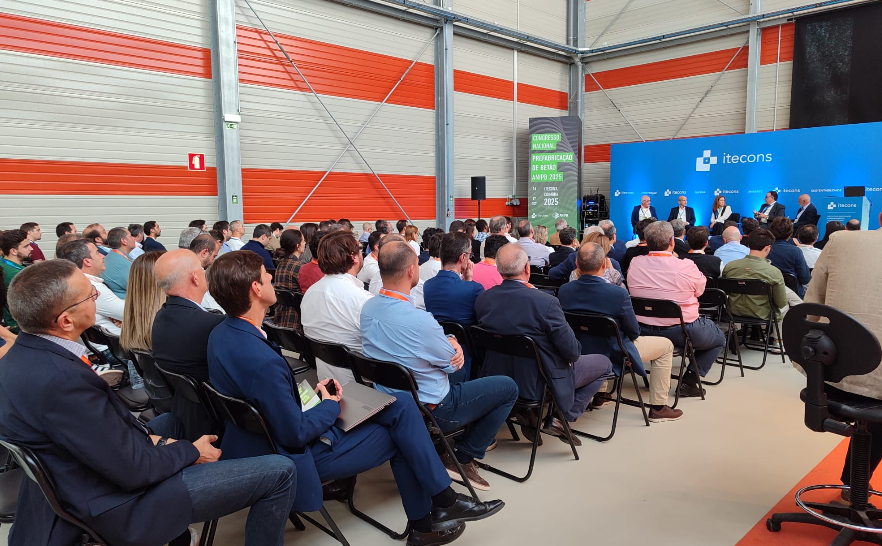
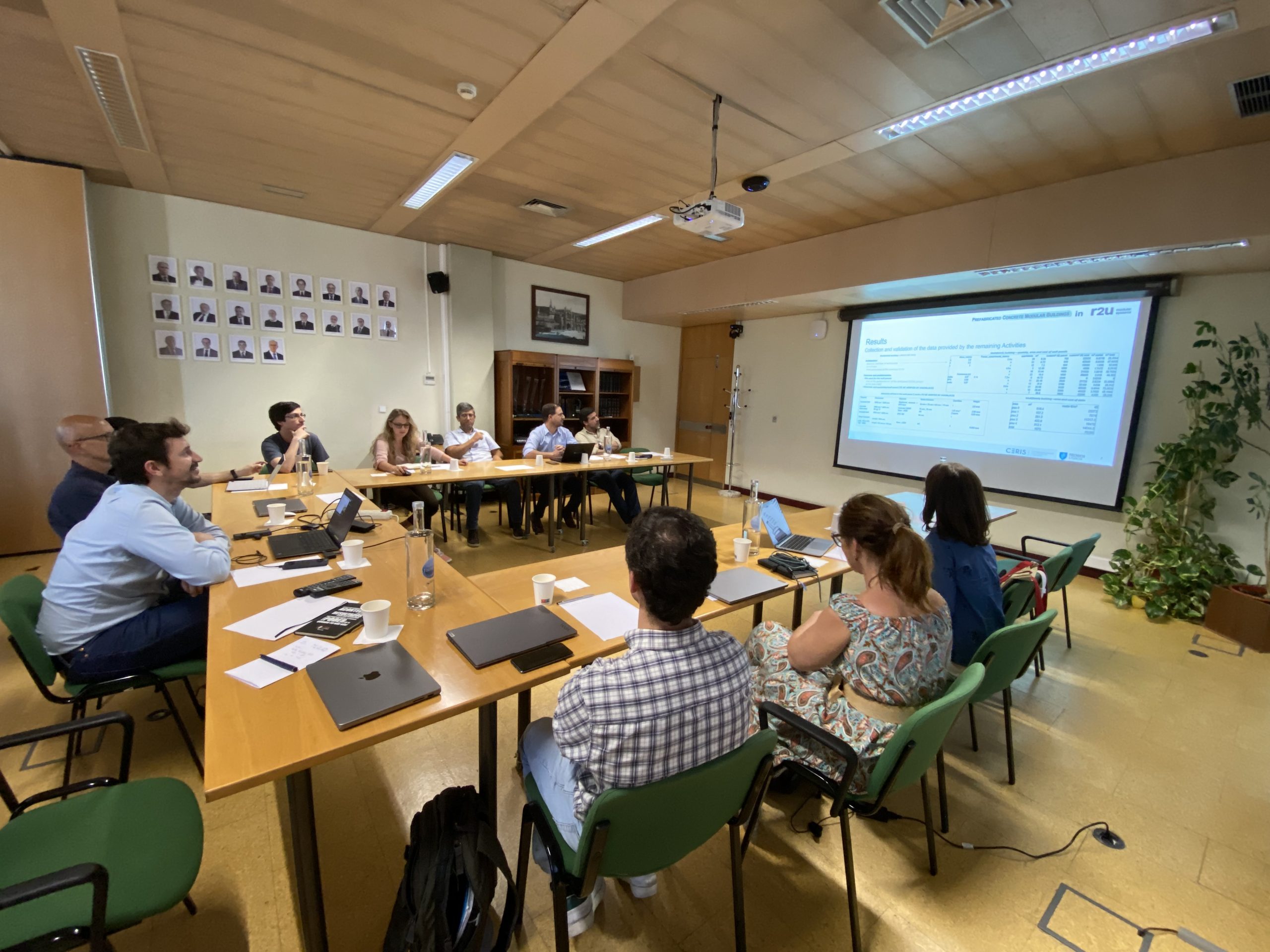
From 16 to 18 June 2025, the international structural engineering community gathered in Antibes, France, for the fib Symposium 2025, under the theme “Concrete Structures: Extend Lifespan, Limit Impacts”. As a flagship event of the International Federation for Structural Concrete (fib), the symposium explored cutting-edge innovations in structural performance, durability, and sustainability.

A major highlight of the event was the special session entirely dedicated to the R2U Technologies project, showcasing the breadth and depth of research being conducted under the Modular Systems framework. This session provided a comprehensive overview of the ongoing developments, with a particular focus on the subproject led by Instituto Superior Técnico, which coordinates the scientific agenda in the field of Prefabricated Concrete Modular Buildings. It also emphasized the strong collaboration between academic institutions, such as ISEC, and industrial partners, including Vigobloco, featuring 10 scientific presentations from both academic and industry contributors. These covered key areas such as prefabrication, concrete technologies, seismic and fire safety, BIM, digitalization, and advanced connection systems
Highlights from the Special Session – Prefabricated Concrete Modular Building
Each presentation contributed uniquely to the advancement of industrialized, sustainable, and resilient building systems:
Cyclic and monotonic testing of a new horizontal dry joint between wall panels confirmed high stiffness and energy dissipation capacity, making it suitable for buildings exposed to seismic action.

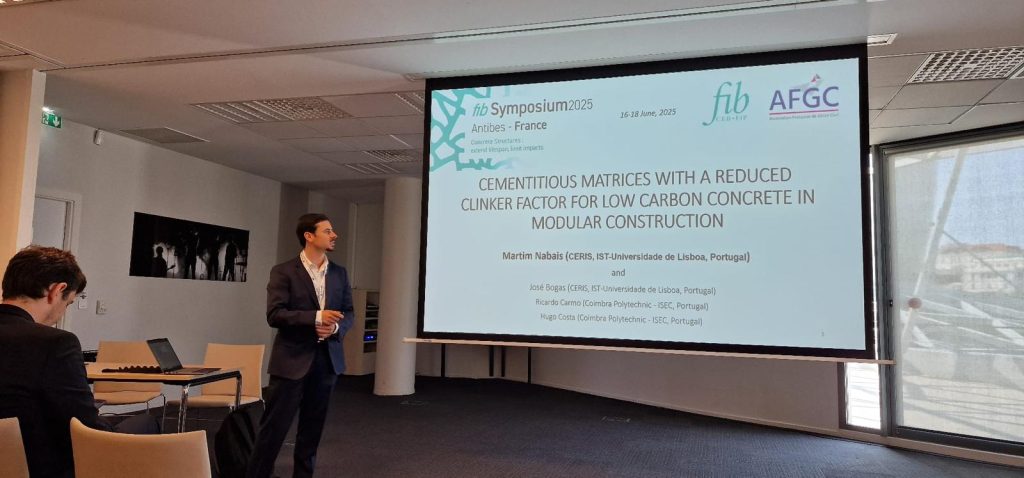
The development of low-carbon concrete using recycled binders showed promising mechanical properties, contributing to the reduction of CO₂ emissions in prefabricated construction.
A numerical assessment of fire behavior in modular concrete walls highlighted the importance of applying non-combustible protective coatings at exposed surfaces and connections to ensure compliance with fire regulations.

Shear performance of newly designed bolted connections for precast panels was validated through laboratory testing, ensuring structural integrity under both service loads and accidental conditions.

Experimental tests on dry-bolted wall connections under cyclic tensile loading demonstrated simplified assembly and strong seismic performance, confirming their viability for modular systems in earthquake-prone areas.

A computer vision-based method was introduced for dimensional quality control of concrete panels, achieving high accuracy in geometry detection and enabling integration into digital manufacturing environments.

A BIM-based library plugin was designed to support circular construction through the use of digital product passports, facilitating the traceability and reuse of prefabricated components across building lifecycles.

A multi-objective optimization approach was used to simultaneously enhance the structural and energy performance of precast wall elements, offering balanced and efficient design alternatives.

Seismic analysis of a six-storey modular concrete building confirmed the structural feasibility of prefabricated systems in high seismic zones, with parametric studies supporting strategic design improvements.

These contributions reflect the multidisciplinary nature of the R2U Technologies project. The visibility and recognition of the project at fib Symposium 2025 mark a significant milestone in its dissemination and collaborative outreach, reinforcing R2U Technologies as a benchmark in next-generation modular construction.